
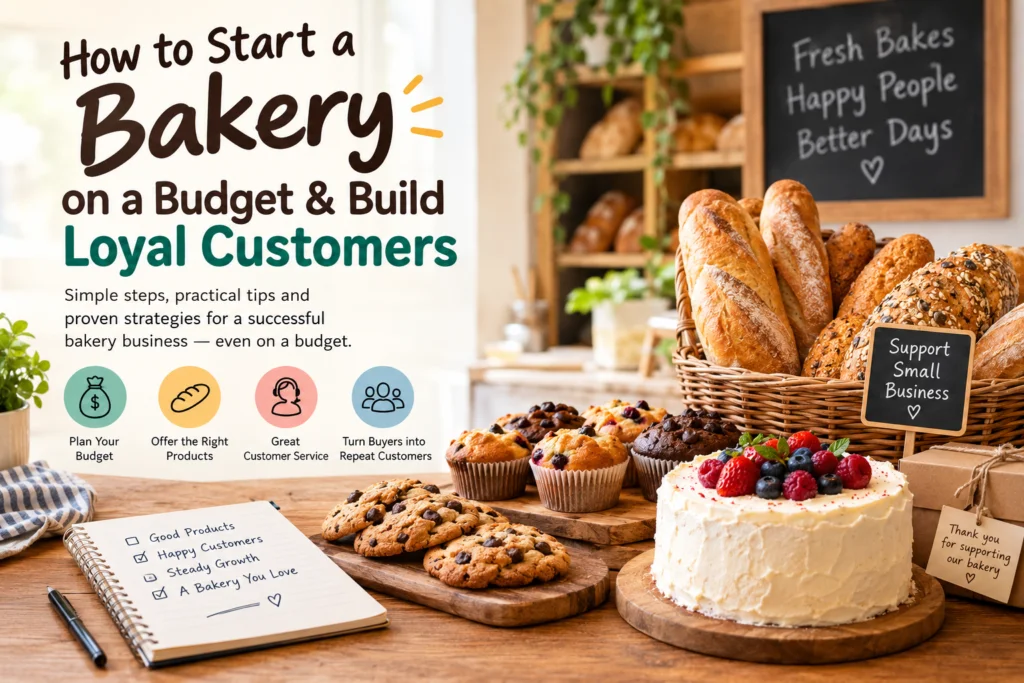
Starting a bakery business can be an exciting opportunity for anyone who loves baking, wants to become an entrepreneur, or is looking for an additional source of income. However, running a successful bakery requires more than preparing delicious bread, cakes and cookies. It requires proper planning, cost management, customer service, consistent quality and a strategy for bringing customers back.
The good news is that you don’t necessarily need a large shop, expensive machinery or a huge investment to get started. A small, well-managed bakery can begin with a limited menu, existing equipment and a simple ordering system.
In this guide, we’ll explore how to start a bakery business on a budget, attract customers, provide dependable customer support and encourage repeat purchases.
1. Choose the Right Bakery Business Model
Before purchasing equipment or renting a location, decide how you want to operate your bakery.
Your business model will influence your startup costs, working hours, production capacity and potential customers.
Home-based bakery
A home-based bakery can be a practical starting point if local regulations permit it and your kitchen meets applicable food safety requirements.
You can:
- Use suitable equipment you already own.
- Accept orders through WhatsApp, social media or phone.
- Bake according to confirmed orders.
- Offer scheduled pickup or delivery.
- Test products before investing in a storefront.
This approach can help reduce fixed costs and minimize unsold inventory.
Small takeaway bakery
A small takeaway bakery can serve neighborhood customers who want fresh bread, buns, cookies and other everyday products.
However, rent, utilities, deposits, equipment, staffing and permits can increase the initial investment. Consider this model after validating demand and understanding your expected sales.
Pre-order and local supply bakery
Another option is supplying baked goods to nearby cafés, offices, small retailers or event organizers.
Potential products include:
- Bread rolls
- Burger buns
- Cookies
- Muffins
- Selected pastries
Recurring business orders can make production planning easier, but wholesale pricing, payment terms, delivery expenses and customer requirements must be carefully calculated.
Practical recommendation: Start with the lowest-cost model that is legally permitted, operationally safe and suitable for your market. Expand only when customer demand and finances support it.
2. Start With a Small, Manageable Menu
One common mistake among new bakery owners is offering too many products too early.
A large menu requires more ingredients, storage space, preparation time and inventory management. It can also increase wastage.
Instead, begin with three to five core products.
Consider the following:
1. Bread or bread rolls: Everyday products that may encourage frequent purchases.
2. Cookies: Suitable for small packs, gifts and simple add-on purchases.
3. Buns or a signature sweet: Give customers something distinctive to remember your bakery by.
4. Celebration cakes: Offer these through advance orders rather than producing them speculatively.
Choose products based on local preferences, ingredient availability, production skills and actual customer demand.
For example, a bakery near offices may find individual snack packs useful, while a residential neighborhood may respond better to bread, family packs and celebration cakes.
Track which products sell consistently and which consume too much time or money.
3. Plan Your Startup Budget Carefully
A low-budget bakery should prioritize essential expenses over appearance.
Before spending money, prepare a basic startup budget covering:
- Essential baking equipment
- Initial ingredients
- Food-safe packaging
- Cleaning and hygiene supplies
- Permits, registration or inspections where applicable
- Utilities and workspace costs
- Delivery or transport
- Emergency working capital
Ways to reduce startup costs
Use existing equipment: Check whether your oven, trays, scales, mixing equipment and storage arrangements are suitable before buying replacements.
Purchase ingredients strategically: Begin with smaller quantities and increase purchases as demand becomes predictable. Compare supplier prices, quality and minimum order quantities.
Use simple packaging: Clean, appropriate packaging with a basic brand label can be sufficient at launch.
Use affordable digital tools: A spreadsheet, simple digital menu and business messaging account can handle many early operations.
Avoid premature hiring: Manage production and orders yourself if practical, or use appropriately trained help when required.
Avoid unnecessary rent: Test demand before committing to a long-term lease.
Keep a reserve for unexpected expenses. Spending the entire budget on equipment leaves little room for daily operating costs.
4. Calculate Your Prices Correctly
A bakery can generate impressive sales and still lose money if prices are poorly calculated.
Your pricing should account for the complete cost of producing and selling each item.
Include:
- Ingredients
- Packaging
- Electricity or gas
- Direct labor, including your own working time
- Expected production waste
- Delivery or payment costs, where applicable
- Allocated business overheads
Example: Pricing a batch of cookies
The following figures are illustrative and use currency units (CU), not actual market prices.
| Expense | Amount |
|---|---|
| Ingredients | 600 CU |
| Packaging | 100 CU |
| Utilities | 100 CU |
| Labor | 300 CU |
| Waste allowance | 50 CU |
| Total batch cost | 1,150 CU |
Suppose the batch produces 25 sellable cookies.
Cost per cookie:
1,150 ÷ 25 = 46 CU
If each cookie sells for 70 CU:
- Total revenue: 1,750 CU
- Batch cost: 1,150 CU
- Remaining contribution: 600 CU
This is not necessarily net profit. Additional business overheads, taxes, transport, fees or other expenses may still apply.
Understanding gross margin
If the fully calculated cost of a product is 46 CU and your target gross margin is 30%, the price would be:
46 ÷ (1 − 0.30) = 65.71 CU
A selling price around 66–70 CU might be considered, subject to customer demand, competitor pricing and the costs included in your calculation.
Gross margin is different from markup. A 30% markup on 46 CU gives a different selling price than a 30% gross margin.
Review your prices regularly as ingredient and utility costs change.
5. Make Customer Support a Competitive Advantage
Customer support is one of the most affordable ways for a small bakery to build trust.
Customers remember not only what they purchased, but also how easy it was to place an order and how they were treated.
Respond to inquiries promptly
Set business hours and aim to respond within 15–30 minutes during those hours when possible.
If you’re baking or handling orders, send a short acknowledgment explaining when the customer can expect a response.
Avoid promising immediate replies if you cannot consistently provide them.
Confirm every order
A proper order confirmation should include:
- Product names and quantities
- Total price
- Pickup or delivery details
- Expected preparation or delivery time
- Payment status
- Special instructions
This simple habit reduces misunderstandings and helps customers feel confident.
Communicate delays honestly
If an order will be delayed, inform the customer as soon as possible.
Offer realistic options, such as an updated time, rescheduling or cancellation with an appropriate refund under your stated policy.
Trust is easier to maintain when communication happens before a problem escalates.
Handle complaints professionally
When a customer complains:
- Listen without interrupting.
- Thank them for bringing the issue to your attention.
- Apologize for the inconvenience.
- Establish what happened.
- Offer a fair and practical resolution.
- Record the issue and prevent it from happening again.
Depending on the situation, a refund, replacement or another appropriate remedy may be reasonable.
Food safety complaints require particular care. Stop distribution of potentially affected products, investigate and follow applicable food safety and reporting procedures.
Follow up after purchases
A short follow-up message can help you understand customer satisfaction.
For example:
“Hi! We hope you enjoyed your order. We’d love to hear how everything was. Your feedback helps us improve. Thank you for supporting our bakery!”
Send follow-ups appropriately and respect customers who prefer not to receive messages.
6. How to Turn First-Time Buyers Into Regular Customers
Getting a customer to make a first purchase is valuable. Giving them a reason to return is even more valuable for sustainable growth.
Here are six practical strategies.
1. Create a signature product
Develop one product customers can associate with your bakery.
It could be a distinctive cookie, a soft bun, a favorite bread recipe or a popular dessert.
Focus on consistency rather than constantly changing the recipe.
A signature product gives customers a reason to recommend you to others.
2. Build a weekly buying habit
Create predictable product schedules.
Examples:
- Fresh bread at a consistent time.
- Friday snack boxes.
- Weekend breakfast bundles.
- Monthly celebration cake reminders for customers who request them.
A routine can make purchasing easier for customers and production easier for you.
3. Introduce a simple loyalty program
You don’t need an expensive rewards platform.
A basic loyalty card could offer a small reward after eight qualifying purchases.
Before introducing the offer, calculate its cost and establish clear conditions.
Make sure the reward encourages repeat business without reducing your profits excessively.
4. Make reordering simple
Customers should not have to explain their entire order every time.
Offer a clear digital menu and a simple ordering method.
For returning customers, you can make reordering easier by retaining necessary preferences with their permission.
5. Encourage referrals
Satisfied customers can introduce your bakery to friends, relatives and colleagues.
Consider a modest referral reward, such as a small add-on or a limited discount after a successful qualifying purchase.
Keep the reward affordable and transparent.
6. Build business-to-business relationships
Approach nearby offices, cafés, retailers and event planners where suitable.
Offer a small sample selection, a clear product list and transparent wholesale pricing.
Reliable delivery, consistent quality and professional invoicing can help you earn recurring orders.
Do not depend on one large buyer. Maintain a diverse customer base where possible.
7. Use Affordable Marketing to Attract Local Customers
You don’t need to begin with expensive advertising campaigns.
Start by making your bakery easy to discover and contact.
Set up your basic online presence
Consider:
- A WhatsApp Business profile or equivalent business messaging channel.
- A simple digital menu with prices.
- A social media business page.
- A local business listing, if eligible.
- Clear pickup and delivery information.
Use real product photographs taken in good lighting.
Show your products, packaging, preparation standards and ordering instructions honestly.
Share useful and appealing content
Your content can include:
- Freshly baked products.
- Daily or weekly menus.
- Behind-the-scenes preparation.
- Customer reviews shared with permission.
- Seasonal offers.
- Limited pre-order announcements.
Avoid purchasing fake reviews or making unsupported health, ingredient or freshness claims.
Promote locally
Depending on local rules and your audience, consider:
- Neighborhood community groups.
- Local events and markets.
- Partnerships with complementary businesses.
- Customer referrals.
- Small tasting sessions.
Test one marketing activity at a time and track how many genuine orders it generates.
8. Maintain Food Safety and Consistent Quality
Customer loyalty depends on trust, and food safety must come before sales.
The World Health Organization recommends five key practices for safer food:
- Keep clean.
- Separate raw and cooked foods.
- Cook thoroughly.
- Keep food at safe temperatures.
- Use safe water and raw materials.
These principles are useful starting points, but your business must also follow applicable local food safety requirements.
Practical steps include:
- Establishing cleaning and sanitizing routines.
- Washing hands properly.
- Using safe ingredients from reliable suppliers.
- Preventing cross-contamination.
- Monitoring storage conditions.
- Following validated baking and cooking processes.
- Protecting products during packaging and transportation.
- Providing accurate allergen information.
- Setting appropriate shelf-life and storage instructions.
Do not assume that every baked product is shelf-stable. Cream-filled cakes, custards and other perishable products may require refrigeration and controlled handling.
For further guidance, consult the WHO’s Five Keys to Safer Food.
9. Establish a Simple Daily Operating Routine
A consistent routine helps prevent mistakes and makes a small bakery easier to manage.
Evening before production
- Review confirmed orders.
- Check ingredient availability.
- Prepare a production list.
- Plan quantities based on demand.
During production
- Follow standardized recipes.
- Maintain hygiene.
- Monitor product quality.
- Record batch quantities and waste.
During customer service and dispatch
- Confirm orders.
- Check packaging and labels.
- Coordinate pickup and delivery.
- Communicate any changes promptly.
At closing
- Reconcile sales and payments.
- Record expenses and waste.
- Review customer feedback.
- Check stock.
- Prepare for the next business day.
Keep a basic record of supplier purchases, batch production, customer orders and complaints.
These records will help you identify operational problems early.
10. Follow a Practical 30-Day Bakery Launch Plan
You don’t need to perfect every business process before making your first sale. Start with a manageable experiment and learn from real customers.
Week 1: Research and preparation
- Study nearby bakery products and prices.
- Speak with 15–20 potential customers.
- Identify products people actually want.
- Test three to five recipes.
- Calculate costs and review legal requirements.
Week 2: Soft launch
- Offer a limited menu.
- Accept a manageable number of paid orders.
- Collect customer feedback.
- Check product quality and packaging.
- Adjust prices and processes if necessary.
Week 3: Build repeat purchases
- Make reordering easy.
- Introduce one affordable loyalty or referral offer.
- Contact a few potential business buyers.
- Ask satisfied customers for honest reviews.
- Monitor repeat orders and production waste.
Week 4: Review and improve
- Identify your best-selling and most profitable products.
- Review customer satisfaction.
- Compare revenue and expenses.
- Identify recurring customer complaints.
- Decide which products or activities to continue.
At the end of the first month, focus on what the evidence tells you rather than expanding simply because sales have started.
11. Measure What Matters
A few simple business metrics can help you make better decisions.
Repeat customer rate
Measure the percentage of customers in a defined customer group who purchase again during a specified period.
For example:
Returning customers from a defined cohort ÷ customers in that cohort × 100
Define your time period and customer group consistently. Repeat purchase behavior varies by product, since bread and celebration cakes naturally have different buying cycles.
Average order value
Total sales ÷ number of orders
This can help you understand whether bundles or product combinations are useful.
Waste rate
Track the cost of unsold or discarded production compared with the total production cost.
Reducing avoidable waste can improve profitability.
Contribution per order
Order revenue minus variable costs.
This helps you understand which orders contribute toward fixed expenses and profit.
On-time fulfillment rate
Orders fulfilled on time ÷ total orders × 100
Reliable service is essential for customer satisfaction.
Review these numbers weekly and use the results to improve operations.
12. Common Bakery Business Mistakes to Avoid
Several avoidable mistakes can put pressure on a new bakery.
Offering too many products: Begin small and expand based on demand.
Undercutting every competitor: Low prices cannot compensate for unsustainable costs.
Ignoring your own labor: Your time has economic value and should be included in pricing decisions.
Producing too much inventory: Use pre-orders and smaller batches to manage uncertainty.
Ignoring customer complaints: Feedback can reveal quality, packaging or communication problems.
Investing in appearance too early: Prioritize product quality, safety and dependable service.
Expanding without financial records: Growth can increase costs and working capital requirements.
Sending excessive marketing messages: Respect customers’ communication preferences.
Conclusion: Build a Bakery Customers Want to Return To
A successful bakery does not necessarily begin with a large investment. It begins with a clear business model, carefully chosen products, realistic pricing and a commitment to quality.
Start small. Understand your customers. Keep your operations organized. Provide helpful customer support and make repeat purchases easy.
Over time, focus on the products customers love, the services they value and the processes that keep your business financially sustainable.
The real goal is not simply to sell baked goods today. It is to build a bakery that customers trust and willingly return to tomorrow.
Author’s practical note: Startup costs, licensing requirements, ingredient prices, customer preferences and delivery expenses differ significantly by location. Prepare a local budget and confirm applicable food business requirements before launching. Examples in this article are illustrative, not guaranteed earnings or universal market prices.
İf you want to start a coffee business, read my blog for beginners coffee business startup guide. https://saffaarain.com/how-to-start-a-small-coffee-business-with-1000-and-grow-it-into-a-5000-a-month-business/